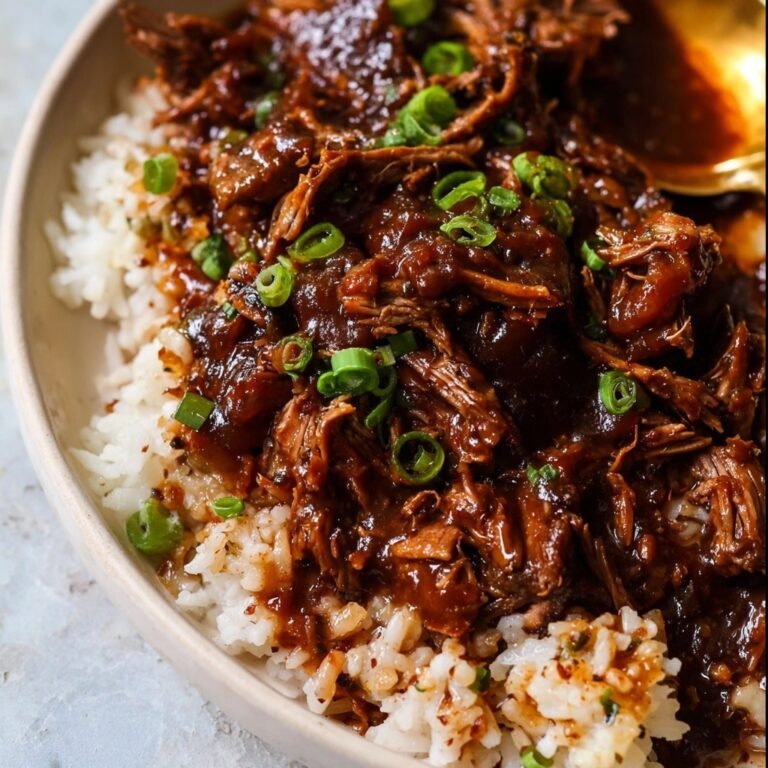

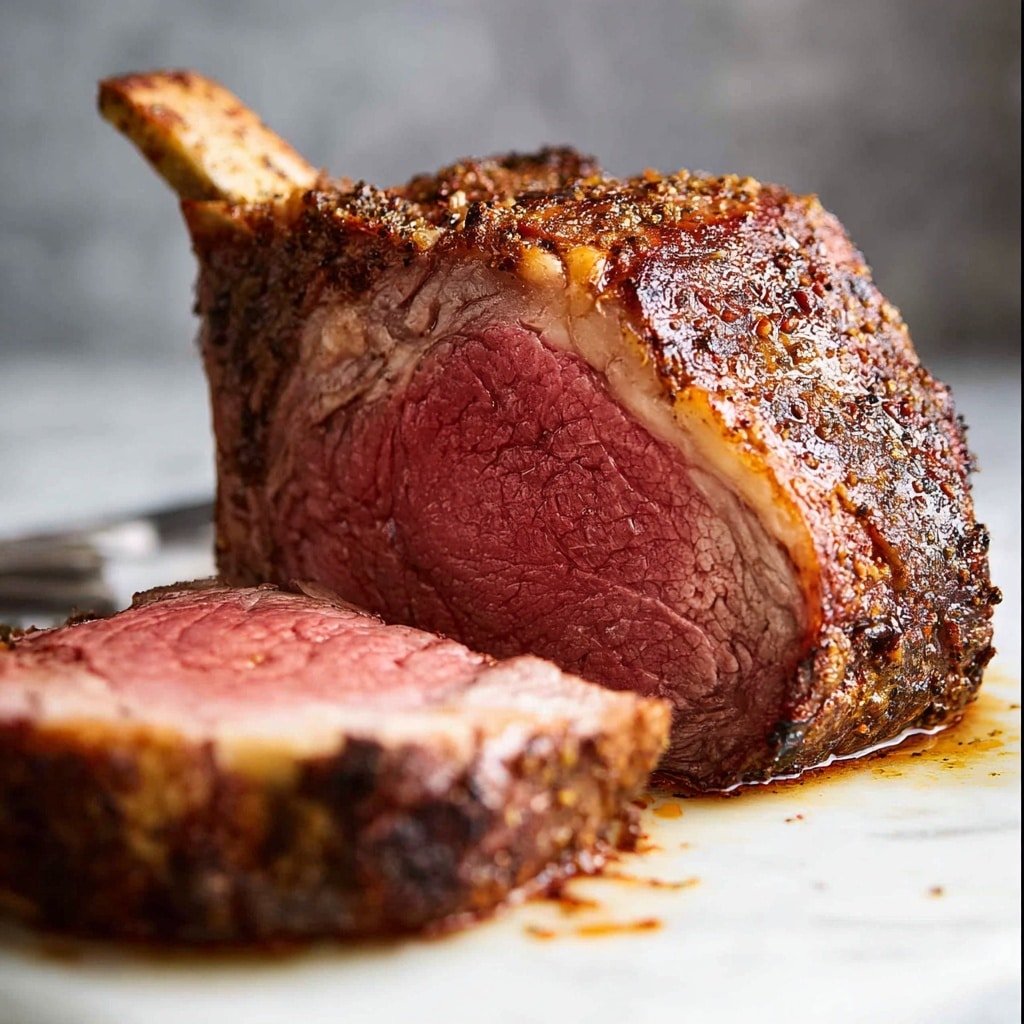
I have to confess: the Juiciest Oven-Roasted Prime Rib with Garlic Herb Butter and Red Wine Sauce Recipe brings me right back to my last holiday dinner with family. It’s one of those recipes that instantly makes the house smell irresistible—the garlic mingles with fresh rosemary and thyme, and that buttery crust? Absolutely dreamy. I love making this roast when I want to impress guests without spending all afternoon babysitting the oven, and honestly, everyone always asks for seconds. The way the meat slices reveal that perfect pink center still makes me smile every time.
Why This Recipe Shines
- Flavor Harmony: The garlic herb butter perfectly balances the rich natural beef flavor with fresh herbs and a hint of spice.
- Easy Assembly: Minimal prep with simple layering — just butter, herbs, and a roasting bed of onion and garlic to elevate every bite.
- Texture Play: Crispy, buttery crust on the outside with the juiciest, tender medium-rare inside.
- Showstopper Finish: The homemade red wine sauce turns this prime rib from special to unforgettable.
This Juiciest Oven-Roasted Prime Rib with Garlic Herb Butter and Red Wine Sauce Recipe is unique because it takes the crown for both simplicity and sophistication. The slow roasting method locks in juices while the initial high temp blast creates that mouthwatering crust. The aroma as it bakes—garlicky, herbal, meaty—is seriously comforting, and the rich red wine sauce brings a luxurious finish that feels fancy but is surprisingly easy to pull off. Plus, the colors you get—from golden buttered edges to deep ruby sauce—make the whole presentation pop.
Don’t worry if you’re new to roasting prime rib; I’ll guide you through each step to get the internal temps just right for medium-rare perfection. You’ll see it’s absolutely doable with a basic oven thermometer and some patience. I promise, by the end, you’ll feel like a roast pro and have everyone around the table asking for this recipe.
Ingredients You’ll Be Working With
Let’s talk ingredients — it’s important to measure carefully because the seasoning and roasting times can really affect how the Juiciest Oven-Roasted Prime Rib with Garlic Herb Butter and Red Wine Sauce Recipe turns out. Don’t worry, all the exact measurements are in the printable recipe card at the bottom, but here’s a handy snapshot of what you’ll need and why.
- Standing rib roast / prime rib: The star of the show; bone-in delivers more flavor and even cooking.
- Onion (unpeeled): Creates a natural roasting bed to keep the meat elevated and adds subtle sweetness.
- Garlic head (unpeeled): Roasts alongside the beef, infusing the pan and sauce later.
- Fresh thyme and rosemary: Aromatic herbs that brighten the herbal butter and roast flavor. Dried works if fresh isn’t available.
- Unsalted butter: Softened for easy mixing; controls salt levels in the herb butter.
- Garlic cloves (minced): The punchy base for the butter’s flavor.
- Salt and black pepper: Essential seasonings for bringing out natural savory notes.
- Dry red wine: Used for the sauce; choose a good-quality but affordable bottle like Shiraz or Cabernet Sauvignon.
- Beef broth/stock (low salt): Adds depth to the red wine sauce without overpowering saltiness.
- Cornflour (optional): For thickening the sauce; easy to omit for a thinner jus.
If you ever need to substitute, you can swap fresh herbs for dried by reducing quantities, and boneless rib roast will work but check internal temps earlier as it cooks faster without bones.
Chef’s Note
You’ll find the complete list of ingredients with exact measurements in the printable recipe card at the bottom of this post.
Tools You’ll Need
- Roasting pan or heavy ovenproof skillet: A sturdy base that holds the herbs and veggies while elevating the roast.
- Meat thermometer: The secret weapon for checking doneness without guesswork.
- Mixing bowl: For easily combining your garlic herb butter.
- Spoon or spatula: To spread butter evenly over the roast and to baste during roasting.
- Sharp carving knife: Key to slicing perfect prime rib portions smoothly after resting.
- Saucepan or skillet: For reducing the red wine sauce on the stovetop.
How to Make Juiciest Oven-Roasted Prime Rib with Garlic Herb Butter and Red Wine Sauce Recipe
Let’s get cooking! The process is straightforward and broken into two main phases: preparing the prime rib with that unbeatable garlic herb butter crust, then finishing it with a rich red wine sauce. Make sure your roast has come to room temperature so it cooks evenly.
- Prepare the beef: Take your standing rib roast out of the fridge 2–3 hours early to reach room temperature—this helps it roast evenly. Pat it dry with paper towels to remove any moisture; that ensures a great crust.
- Preheat the oven: Set to 240°C/460°F (220°C fan). Position the rack centrally—you want even heat circulation.
- Make garlic herb butter: In a bowl, mix softened butter with minced garlic, rosemary, thyme, salt, and pepper until well combined. This flavor bomb will coat your roast perfectly.
- Prepare roasting bed: Place quartered unpeeled onion, halved unpeeled garlic head, and fresh herb sprigs in your skillet or roasting pan—this elevates the roast and adds flavor.
- First butter slather and placement: Spread a thin layer of the garlic butter under the roast (bone side). Then place roast butter-side down on the herb bed. Slather about two-thirds of the remaining butter on the top and sides, reserving some for later.
- Initial high-temp roast: Roast at 240°C for 20 minutes to build that incredible crust that seals in juices.
- Second butter slather and temp reduction: Remove the roast from the oven and coat it with the remaining garlic butter. Reduce oven temperature to 120°C/250°F (100°C fan) for slow roasting.
- Slow roast and baste: Cook for about 1½ hours, basting every 30 minutes with pan juices. Begin checking internal temperature early—aim for 51°C (124°F) for medium-rare.
- Rest the roast: Transfer the roast to a plate, tent with foil loosely, and let it rest for 20–30 minutes. This rest period allows juices to redistribute and final temp to rise to 56–58°C (133–136°F).
- Prepare red wine sauce: Set the skillet with onion, garlic, and herbs over high heat. Add red wine and beef broth, simmer rapidly, and reduce by two-thirds (to about 1½ cups) over 10 minutes.
- Thicken the sauce (optional): Mix cornflour with water and slowly whisk in half to the sauce over medium heat. Sauce should thicken to a maple syrup consistency in about a minute. Add more if desired.
- Strain and serve: Pour sauce through a sieve to remove solids, then serve alongside sliced prime rib.
Kitchen Wisdom
- Tip 1: Always bring your roast to room temperature for even cooking inside and out.
- Tip 2: Use a reliable meat thermometer to nail the medium-rare pull temp of 51°C (124°F).
- Tip 3: Basting with pan juices every 30 minutes keeps the meat moist and infuses flavor.
- Tip 4: Don’t skip the resting step—tent loosely to avoid steaming the crust but allow juices to redistribute.
How to Serve
Flavor Boosters
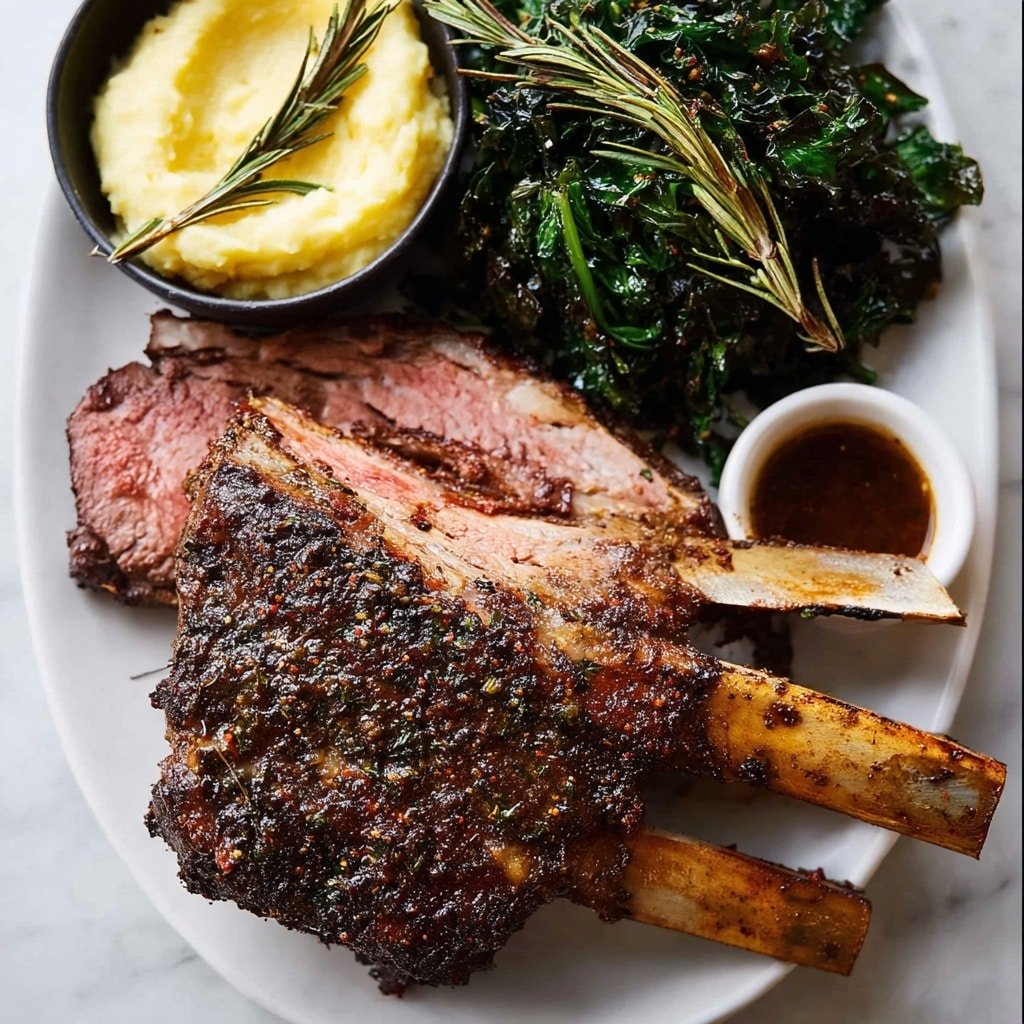
Drizzle a bit more garlic herb butter right over the sliced meat for an extra layer of richness. You can also sprinkle flaky sea salt and freshly cracked pepper just before serving to enhance texture and flavor. For a peppery kick, a little horseradish cream on the side pairs beautifully with this prime rib, balancing the buttery notes.
Perfect Pairings
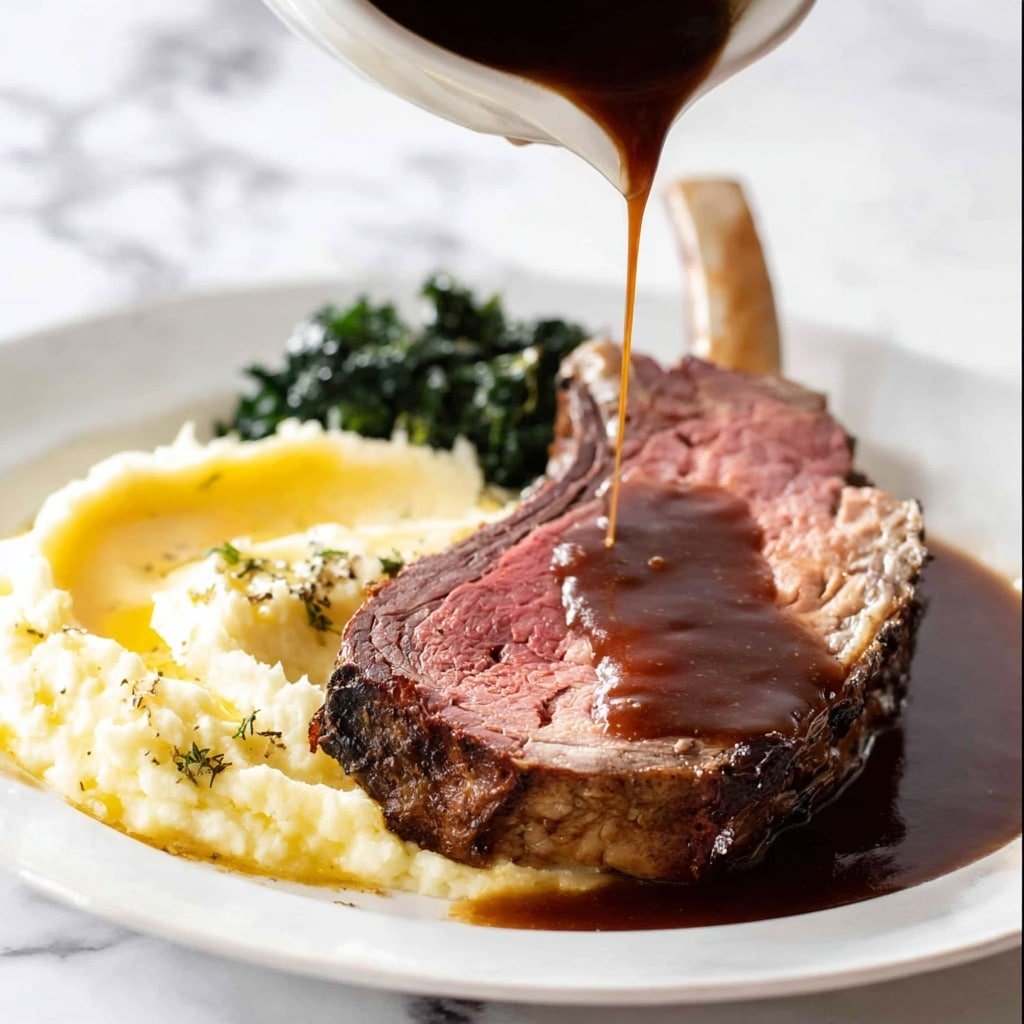
I recommend serving this Juiciest Oven-Roasted Prime Rib with Garlic Herb Butter and Red Wine Sauce Recipe alongside classic steakhouse sides like creamy Paris mash or garlic sautéed spinach to carry the lusciousness without overwhelming the palate. For drinks, a robust red wine like Cabernet Sauvignon or a full-bodied Merlot complements the sauce perfectly, while a sparkling water or light beer balances those rich flavors.
Presentation Touches
Slice the prime rib against the grain into thick, juicy portions for an elegant plate. Arrange slices slightly overlapping on a warm platter and spoon red wine sauce over or alongside for guests to pour. If you’re serving a crowd, slice just before serving to keep the meat juicy, and don’t forget to decorate the platter with fresh herbs or roasted garlic cloves left from the roasting bed for a rustic, inviting touch.
Variations & Easy Swaps
- Dairy-free option: Swap butter for a high-quality olive oil herb paste; it keeps the roast moist but changes texture slightly.
- Herb variations: Try adding fresh sage or oregano to the herb butter mix for a twist.
- Spice boost: Incorporate smoked paprika or a pinch of cayenne into the butter for subtle heat.
- Thickening sauce alternative: Use a beurre manié (butter and flour paste) instead of cornflour for a richer sauce.
- Alcohol-free sauce: Replace red wine with extra beef broth and a splash of balsamic vinegar for acidity.
- Faster roast: Use boneless ribeye but start checking temps earlier as it cooks faster without the bone insulator.
Make-Ahead, Storage & Reheating
- Make the red wine sauce a day ahead—it actually tastes better after resting in the fridge.
- Roast and carve prime rib up to 24 hours before serving; store slices tightly wrapped in the fridge.
- Reheat slices gently in a low oven (140°C/285°F) covered with foil for about 10–15 minutes to avoid drying.
- Leftover prime rib makes fantastic sandwiches or wraps—serve cold or lightly toasted.
- If reheating sauce, warm slowly over low heat, whisking occasionally to prevent separation.
FAQs
How can I tell when the prime rib is perfectly medium-rare?Use a meat thermometer inserted into the thickest part of the roast (away from bone). Pull the roast from the oven when it hits 51°C (124°F); it will rise to about 56-58°C (133-136°F) during resting for an ideal medium-rare.
Can I prepare this recipe with a boneless rib roast?Absolutely! Just keep in mind it will cook faster without the bone, so start checking internal temperature earlier to avoid overcooking.
What if I don’t have fresh herbs?Dried herbs work fine in this recipe—just use about half the amount since dried herbs are more concentrated.
Is it necessary to use red wine in the sauce?Not at all! If you prefer no alcohol, swap the red wine with extra beef broth and a splash of balsamic vinegar for acidity.
How long should I let the roast rest, and why?Rest for 20-30 minutes loosely tented with foil. This allows juices to redistribute for tender slices and lets the internal temp rise to the perfect doneness.
PrintJuiciest Oven-Roasted Prime Rib with Garlic Herb Butter and Red Wine Sauce Recipe
This Juiciest Oven-Roasted Prime Rib recipe delivers a tender, flavorful Beef Standing Rib Roast, enhanced by a fragrant garlic herb butter and a rich red wine sauce. Slow-roasted in the oven to a perfect medium-rare, this classic roast beef is ideal for special celebrations or a luxurious family meal, served with optional Paris mash and garlic sautéed spinach for a complete steakhouse-style experience.
- Prep Time: 10 minutes
- Cook Time: 2 hours
- Total Time: 2 hours 10 minutes
- Yield: 6 – 8 servings
- Category: Mains
- Method: Roasting
- Cuisine: Western
Ingredients
Beef and Roasting Bed
- 2.5 kg / 5 lb standing rib roast / prime rib, bone in
- 1 onion, unpeeled, quartered (brown, yellow, white)
- 1 head of garlic, unpeeled, halved horizontally
- 5 sprigs thyme
- 3 sprigs rosemary
Garlic Herb Butter
- 150g / 10 tbsp unsalted butter, softened
- 5 garlic cloves, minced
- 2 tsp finely chopped fresh rosemary (or 1 tsp dried)
- 2 tsp finely chopped fresh thyme (or 1 tsp dried)
- 2 tsp salt
- 1 tsp black pepper
Red Wine Sauce
- 1 1/2 cups beef broth/stock, low salt
- 2 1/2 cups dry red wine
- 1 tbsp cornflour/cornstarch (optional)
Instructions
- Prepare Beef: Remove the beef from the fridge 2 to 3 hours prior to cooking to bring it to room temperature, ensuring even cooking. Pat the roast dry with paper towels to remove any excess moisture.
- Preheat Oven: Preheat your oven to 240°C/460°F (220°C fan). Position the oven rack so the beef will be centered for even roasting.
- Make Garlic Herb Butter: In a bowl, combine softened butter with minced garlic, chopped rosemary, thyme, salt, and black pepper. Mix thoroughly until well blended.
- Prepare Roasting Bed: Place the quartered unpeeled onion, halved garlic head, fresh thyme, and rosemary sprigs in a heavy-based ovenproof skillet or roasting pan to create a flavorful bed for the roast.
- First Butter Slather and Placement: Spread a thin layer of garlic herb butter on the underside (bone side) of the roast. Place the roast butter-side down on the prepared bed. Then spread about two-thirds of the remaining butter evenly on the top and sides of the beef, reserving some for later.
- Initial High-Temperature Roast: Roast the beef in the hot oven for 20 minutes to develop a flavorful crust on the surface.
- Second Butter Slather and Temperature Reduction: Remove the roast from the oven and spread the remaining garlic herb butter evenly over the top and sides. Reduce the oven temperature to 120°C/250°F (100°C fan).
- Slow Roast: Continue roasting for approximately 1 1/2 hours, basting the roast with pan juices every 30 minutes. Begin checking the internal temperature early, aiming for 51°C (123.8°F) for medium-rare doneness.
- Rest the Roast: Remove the roast from the oven, transfer it to a plate, and loosely tent with foil. Let it rest for 20 to 30 minutes to allow the internal temperature to rise to 56-58°C (133-136.4°F) and for juices to redistribute, ensuring maximum tenderness and juiciness.
- Slice and Serve: Carve the prime rib into slices and serve with the prepared red wine sauce. Optionally, serve alongside Paris mash and garlic sautéed spinach for a complete meal.
- Prepare Red Wine Sauce: Place the skillet containing the onion, garlic, and herbs on the stovetop over high heat. Add red wine and beef broth, then bring to a rapid simmer. Reduce the liquid by about two-thirds to approximately 1 1/2 cups over 10 minutes.
- Thicken Sauce (Optional): Reduce heat to medium. Mix cornflour with 2 tablespoons of water to create a slurry, then slowly drizzle half into the simmering sauce, stirring continuously. The sauce will thicken to a maple syrup consistency in about a minute. Add more slurry if a thicker sauce is desired.
- Strain and Serve: Strain the sauce through a fine sieve into a bowl to remove solids, then transfer to a sauce jug for serving alongside the roast.
Notes
- Standing Rib Roast: Also known as Prime Rib, it is best cooked with bones attached and frenched for optimal flavor. Boneless rib eye or scotch fillet roasts can be used but require earlier temperature checks as they cook faster.
- Beef Stock: Use low-sodium broth to avoid an overly salty sauce. If sauce is too salty, dilute with water and add potatoes to absorb excess salt, then simmer and reduce again.
- Wine Selection: Choose a dry red wine suitable for drinking but not overly expensive, such as Shiraz, Cabernet Sauvignon, or Merlot. For alcohol-free versions, replace wine with additional beef stock.
- Internal Temperatures for Doneness: Remove roast at target ‘pull’ temperature (51°C for medium-rare), as the temperature will rise by ~5°C during resting.
- Cooking Times: Add approximately 10-15 minutes per additional kilogram beyond 2.5 kg. Begin monitoring internal temperature early to prevent overcooking.
- Cornflour: Optional thickener for the red wine sauce to achieve desired consistency. Omit if a thinner jus is preferred.
- Make Ahead: Best served fresh but can be kept warm for up to an hour and refreshed briefly in the oven. Leftover prime rib is excellent thinly sliced for sandwiches.
- Unpeeled Onion and Garlic: Keeping them unpeeled maintains their structure during roasting and elevates the roast off the pan base, while softening for use in the sauce.