Juiciest Oven-Roasted Prime Rib with Garlic Herb Butter and Red Wine Sauce Recipe
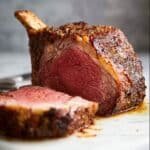
This Juiciest Oven-Roasted Prime Rib recipe delivers a tender, flavorful Beef Standing Rib Roast, enhanced by a fragrant garlic herb butter and a rich red wine sauce. Slow-roasted in the oven to a perfect medium-rare, this classic roast beef is ideal for special celebrations or a luxurious family meal, served with optional Paris mash and garlic sautéed spinach for a complete steakhouse-style experience.
- Prep Time: 10 minutes
- Cook Time: 2 hours
- Total Time: 2 hours 10 minutes
- Yield: 6 – 8 servings
- Category: Mains
- Method: Roasting
- Cuisine: Western
Ingredients
Beef and Roasting Bed
- 2.5 kg / 5 lb standing rib roast / prime rib, bone in
- 1 onion, unpeeled, quartered (brown, yellow, white)
- 1 head of garlic, unpeeled, halved horizontally
- 5 sprigs thyme
- 3 sprigs rosemary
Garlic Herb Butter
- 150g / 10 tbsp unsalted butter, softened
- 5 garlic cloves, minced
- 2 tsp finely chopped fresh rosemary (or 1 tsp dried)
- 2 tsp finely chopped fresh thyme (or 1 tsp dried)
- 2 tsp salt
- 1 tsp black pepper
Red Wine Sauce
- 1 1/2 cups beef broth/stock, low salt
- 2 1/2 cups dry red wine
- 1 tbsp cornflour/cornstarch (optional)
Instructions
- Prepare Beef: Remove the beef from the fridge 2 to 3 hours prior to cooking to bring it to room temperature, ensuring even cooking. Pat the roast dry with paper towels to remove any excess moisture.
- Preheat Oven: Preheat your oven to 240°C/460°F (220°C fan). Position the oven rack so the beef will be centered for even roasting.
- Make Garlic Herb Butter: In a bowl, combine softened butter with minced garlic, chopped rosemary, thyme, salt, and black pepper. Mix thoroughly until well blended.
- Prepare Roasting Bed: Place the quartered unpeeled onion, halved garlic head, fresh thyme, and rosemary sprigs in a heavy-based ovenproof skillet or roasting pan to create a flavorful bed for the roast.
- First Butter Slather and Placement: Spread a thin layer of garlic herb butter on the underside (bone side) of the roast. Place the roast butter-side down on the prepared bed. Then spread about two-thirds of the remaining butter evenly on the top and sides of the beef, reserving some for later.
- Initial High-Temperature Roast: Roast the beef in the hot oven for 20 minutes to develop a flavorful crust on the surface.
- Second Butter Slather and Temperature Reduction: Remove the roast from the oven and spread the remaining garlic herb butter evenly over the top and sides. Reduce the oven temperature to 120°C/250°F (100°C fan).
- Slow Roast: Continue roasting for approximately 1 1/2 hours, basting the roast with pan juices every 30 minutes. Begin checking the internal temperature early, aiming for 51°C (123.8°F) for medium-rare doneness.
- Rest the Roast: Remove the roast from the oven, transfer it to a plate, and loosely tent with foil. Let it rest for 20 to 30 minutes to allow the internal temperature to rise to 56-58°C (133-136.4°F) and for juices to redistribute, ensuring maximum tenderness and juiciness.
- Slice and Serve: Carve the prime rib into slices and serve with the prepared red wine sauce. Optionally, serve alongside Paris mash and garlic sautéed spinach for a complete meal.
- Prepare Red Wine Sauce: Place the skillet containing the onion, garlic, and herbs on the stovetop over high heat. Add red wine and beef broth, then bring to a rapid simmer. Reduce the liquid by about two-thirds to approximately 1 1/2 cups over 10 minutes.
- Thicken Sauce (Optional): Reduce heat to medium. Mix cornflour with 2 tablespoons of water to create a slurry, then slowly drizzle half into the simmering sauce, stirring continuously. The sauce will thicken to a maple syrup consistency in about a minute. Add more slurry if a thicker sauce is desired.
- Strain and Serve: Strain the sauce through a fine sieve into a bowl to remove solids, then transfer to a sauce jug for serving alongside the roast.
Notes
- Standing Rib Roast: Also known as Prime Rib, it is best cooked with bones attached and frenched for optimal flavor. Boneless rib eye or scotch fillet roasts can be used but require earlier temperature checks as they cook faster.
- Beef Stock: Use low-sodium broth to avoid an overly salty sauce. If sauce is too salty, dilute with water and add potatoes to absorb excess salt, then simmer and reduce again.
- Wine Selection: Choose a dry red wine suitable for drinking but not overly expensive, such as Shiraz, Cabernet Sauvignon, or Merlot. For alcohol-free versions, replace wine with additional beef stock.
- Internal Temperatures for Doneness: Remove roast at target ‘pull’ temperature (51°C for medium-rare), as the temperature will rise by ~5°C during resting.
- Cooking Times: Add approximately 10-15 minutes per additional kilogram beyond 2.5 kg. Begin monitoring internal temperature early to prevent overcooking.
- Cornflour: Optional thickener for the red wine sauce to achieve desired consistency. Omit if a thinner jus is preferred.
- Make Ahead: Best served fresh but can be kept warm for up to an hour and refreshed briefly in the oven. Leftover prime rib is excellent thinly sliced for sandwiches.
- Unpeeled Onion and Garlic: Keeping them unpeeled maintains their structure during roasting and elevates the roast off the pan base, while softening for use in the sauce.